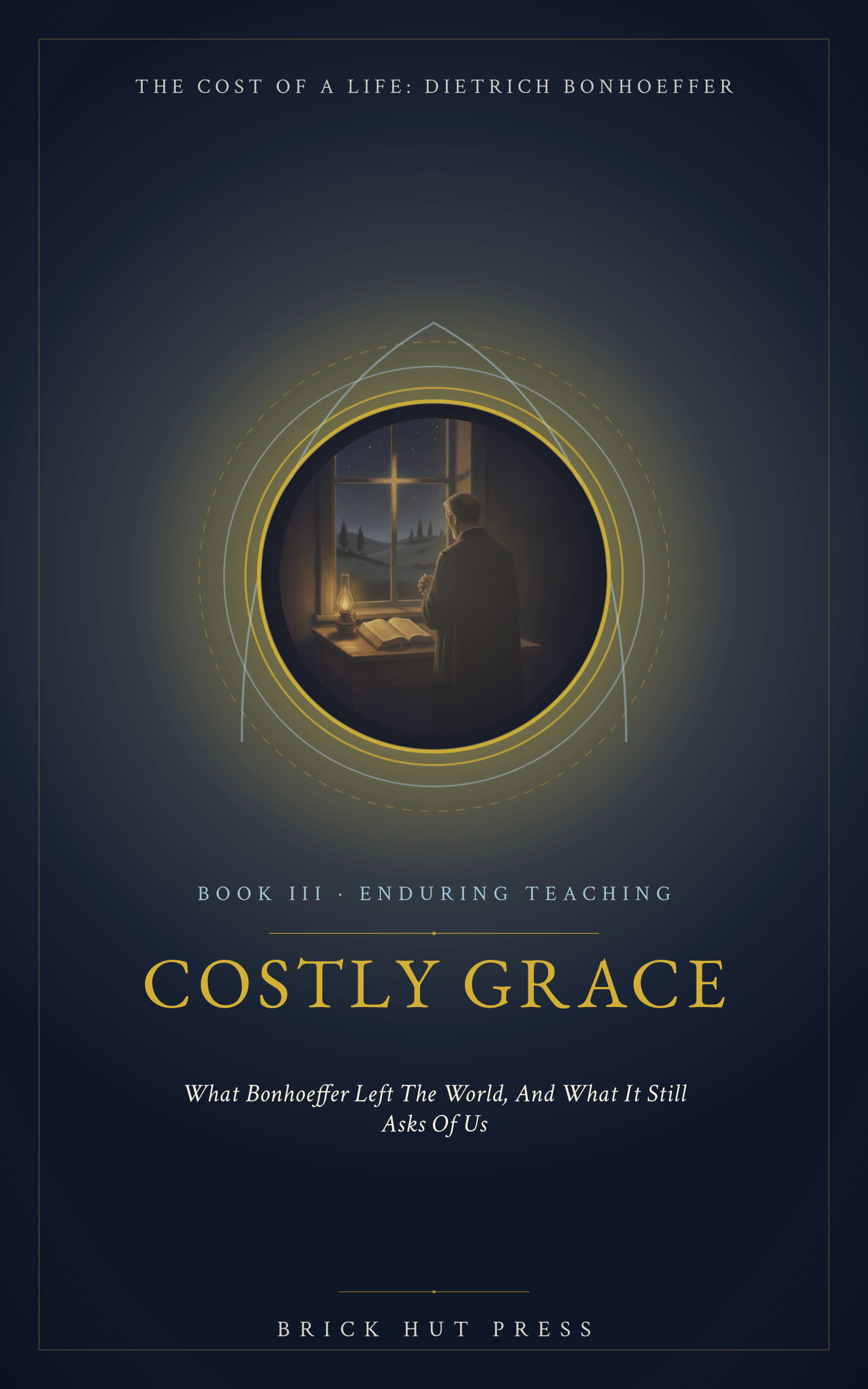
Costly Grace
He Didn't Leave Us a Monument. He Left Us a Question. Dietrich Bonhoeffer gave the Church something far more unsettling than a legacy, he gave it a mirror. Look into it long enough and you will have to answer for yourself: am I following Christ, or merely believing in him? Costly Grace: What Bonhoeffer Left the World, and What It Still Asks of Us is not a biography, not a theology textbook, and not a museum tour of a safely distant martyr.
Read the full description
It is an unhurried, searching, and deeply personal reckoning with the man, his message, and the living demand he places on every disciple who dares to take him seriously. Bonhoeffer walked away from safety. He walked back into Nazi Germany when he could have stayed in America. He chose the fellowship of the suffering Church over the comfort of academic distance. And then he was hanged, quietly, before dawn, weeks before liberation, having spent himself entirely in obedience to a Christ he believed was worth everything. That totality is what this book is about. Not just what he thought, but how he lived it. Not just his famous phrases, but the soul those phrases came from, and the soul they still call out to in us.
About this volume
This is the third and final volume of a trilogy, and it is the one that asks the harder question. The first two books followed Dietrich Bonhoeffer from Breslau to the Tegel cell, tracing the shape of a life. This volume begins where that life ended, at Flossenbürg in the gray hour before dawn on April 9, 1945, and then turns to ask what such a death was for. Not what it meant in the abstract, but what it demands of the people who read about it afterward, in seminary classrooms and church basements and quiet mornings alone with a Bible. That is the argument this book makes from its first page: Bonhoeffer's afterlife is not a footnote to his biography. It is the point of writing one.
The chapters move outward from the gallows in concentric rings. We meet Eberhard Bethge in the immediate aftermath, the friend who carried the letters out of the ruins and made the decisions, quiet and enormous, that turned a dead pastor's private correspondence into Letters and Papers from Prison. We sit with the phrase that made Bonhoeffer's name a byword in Protestant preaching ever since: cheap grace, and the costly grace he set against it, and the chapter here does not let the phrase go soft with overuse. It asks what "cheap grace" actually named in the German church of the 1930s, and what it names now, in congregations that have never faced a Gestapo but face their own quieter accommodations. From there the book takes up the prison theology proper: the haunting question "Who is Christ for us today?", and the fragmentary, unfinished, endlessly argued-over notion of religionless Christianity, treated here neither as a scandal nor a slogan but as a gift still working itself out, a goad to a church too comfortable with its own religiousness.
The middle chapters widen the frame further. One considers the ten figures carved above the West Door of Westminster Abbey, Bonhoeffer among them, a twentieth-century martyr set in stone beside company he never expected to keep. Another returns to the discipline of Life Together, the small book born of the Finkenwalde seminary, and asks what it might still mean as a permanent gift to churches that have largely forgotten what it cost to write. And in a chapter that will surprise readers who think of Bonhoeffer as a purely European figure, the book follows his thought across the Atlantic and into Selma, where his words on costly discipleship found ears that needed them for reasons he could not have fully foreseen from a German prison cell.
The volume does not end its work at the ethics either, though the chapter on Bonhoeffer's unfinished Ethics manuscript, that great, fragmentary, unresolved word to a church trying to think through what responsible action looks like when the old rules no longer hold, is treated with the seriousness it deserves. There is a chapter on Maria von Wedemeyer, his fiancée, that refuses to treat her as a footnote to his martyrdom; it asks plainly what it costs the living to be the ones a witness leaves behind, the weight carried by those who loved him and had to keep living after the history books closed the account.
The book closes not with a summary but with an invitation, "Come and Follow," addressed less to the reader's admiration than to the reader's Monday morning. This is a volume for those who already know the outline of Bonhoeffer's death and want to understand what it was for: readers finishing the earlier two volumes of this trilogy, seminarians assigned Life Together without context, pastors reaching again for costly grace before a sermon, anyone who has sat with Letters and Papers from Prison and wondered what, exactly, it is still asking of them. It does not flatten the man into a saint of easy quotation. It asks what discipleship costs when there is no gallows waiting, only the ordinary difficulty of an ordinary life lived honestly before God.
Not sure yet? Begin freely.
Come and Die, a complete portrait of this life, free, kept in your own library here. The door into all 3 volumes.
Receive the free book →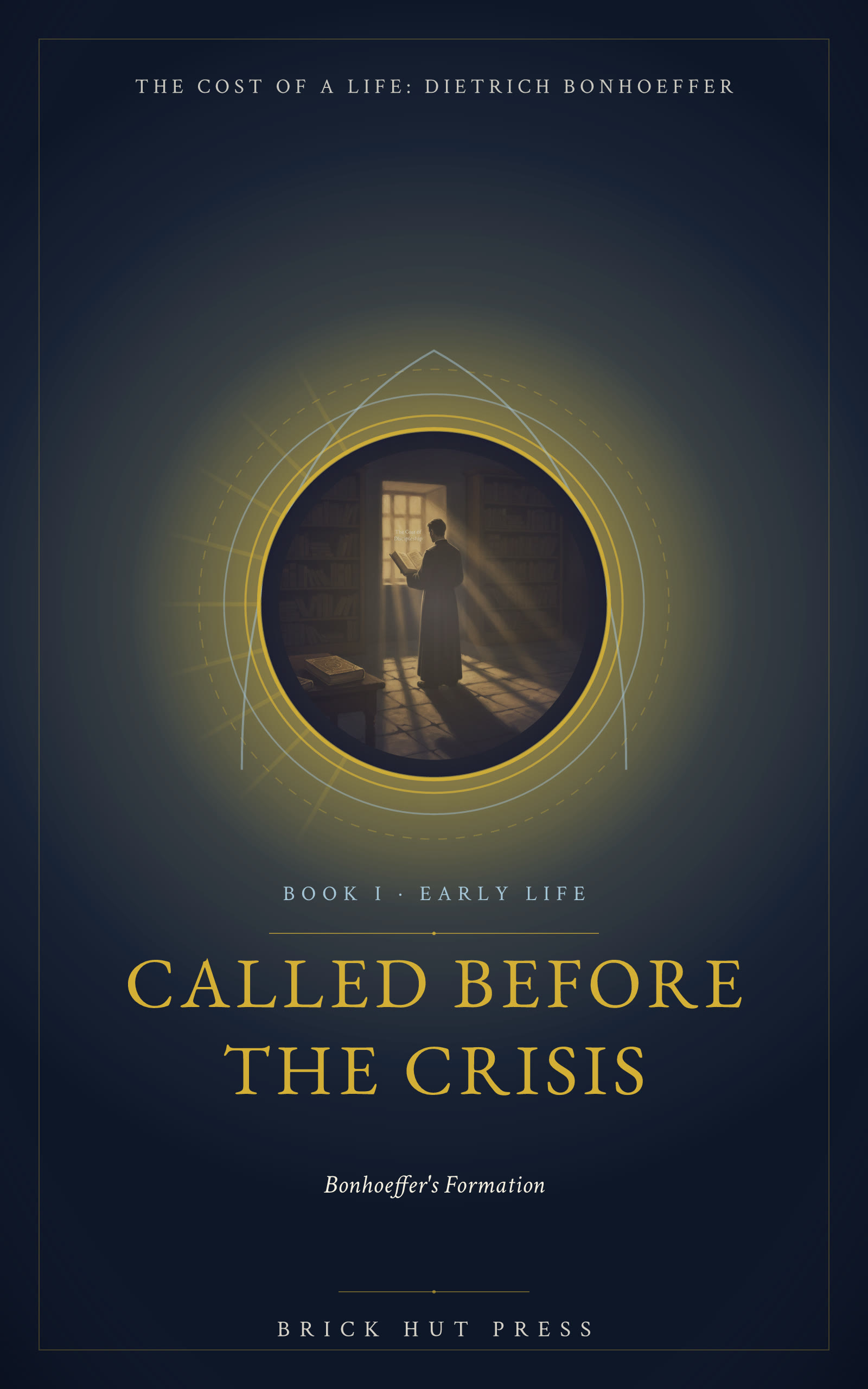
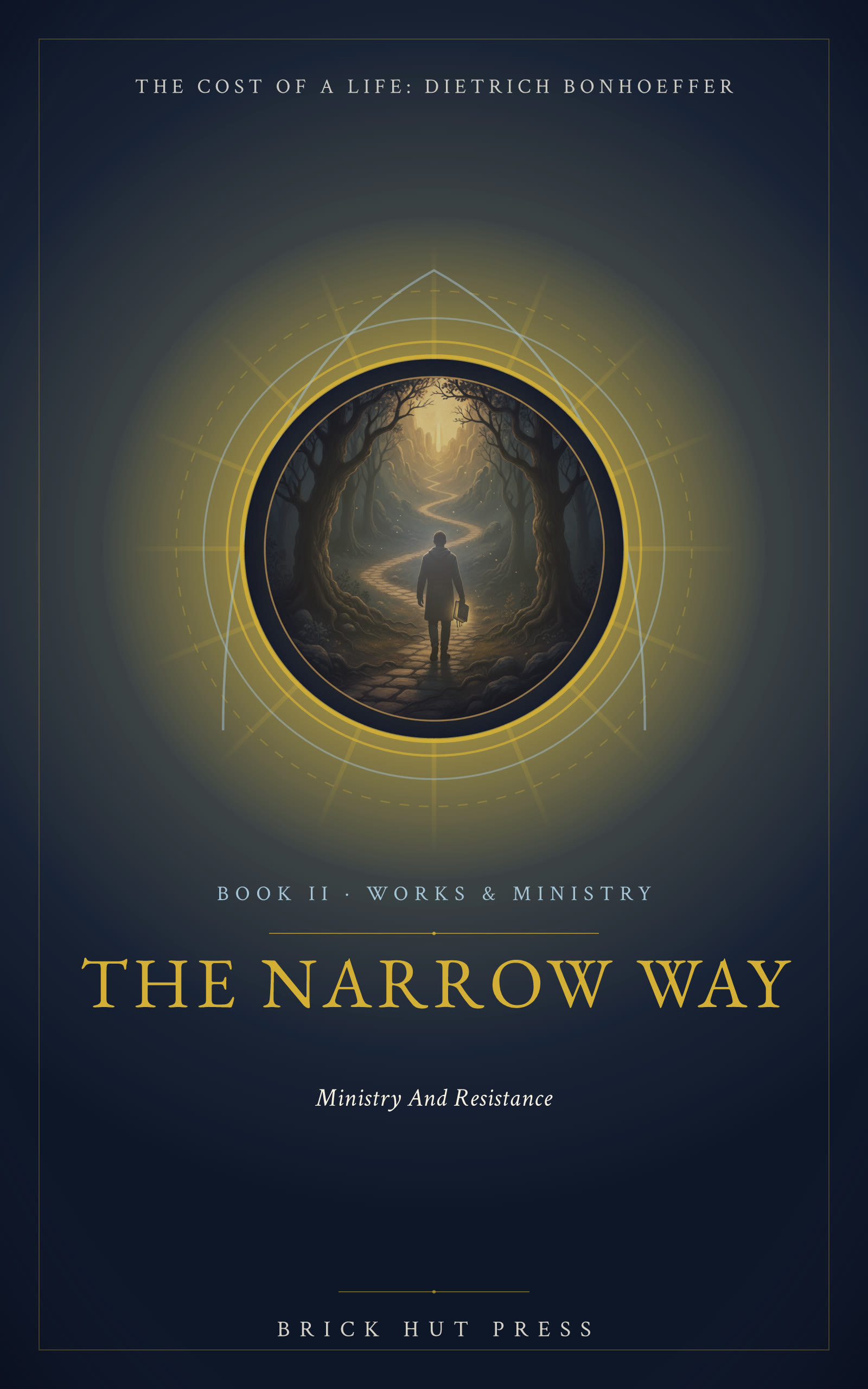
Lives that walk beside Dietrich Bonhoeffer, chosen for their likeness, not their fame.