Ilaya Perumal: The Young Lord
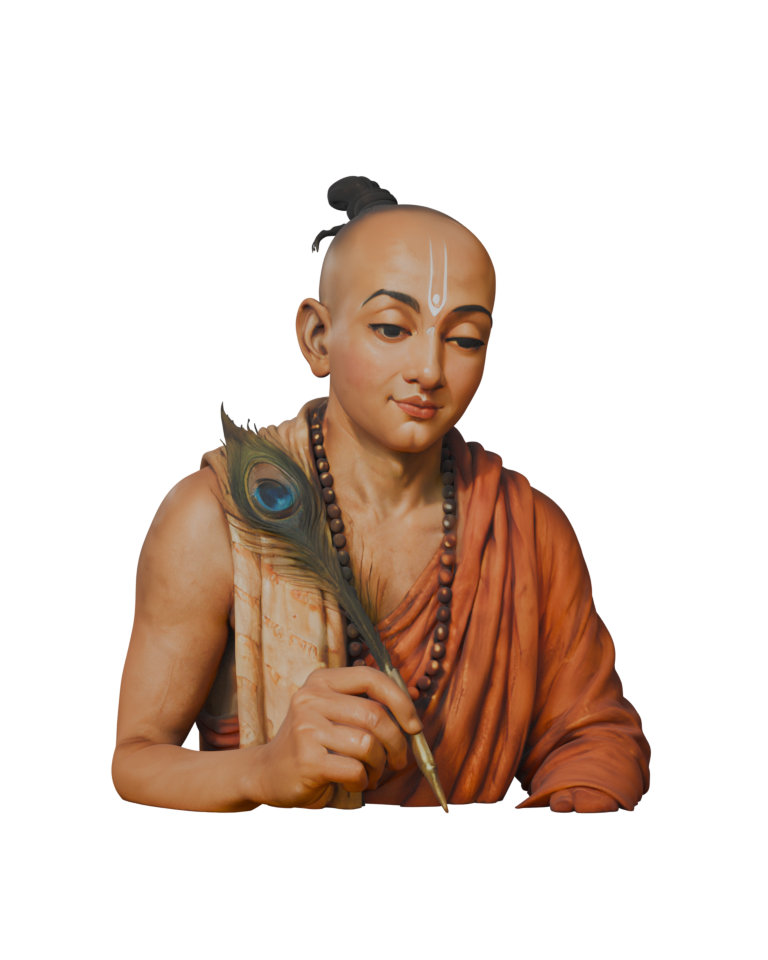
He Was Called the Young Lord, And Heaven Agreed Before Ramanuja reformed temples, systematized Vishishtadvaita, or threw open the gates of liberation to all, he was simply Ilaya Perumal, a child in Sriperumbudur whom grace had already chosen. This devotional account does not begin with philosophy.
Read the full description
It begins at the beginning: with a birth marked by signs, a childhood saturated with Narayana's presence, and a young soul being shaped, year by year, for a purpose he could not yet name. If you have recited the Divya Prabandham at dawn, if you have stood before the Acharya's shrine and felt something stir that doctrine alone cannot explain, if you have longed to know Ramanuja not as a figure in a lineage chart but as a living presence, this book was written for you. From within the Sri Vaishnava tradition, with reverence as its compass and the bhakti path as its road, Ilaya Perumal: The Young Lord traces the hidden architecture of grace across the early life of the greatest Acharya of the Vaishnava world.
Not sure yet? Begin free.
The Mercy That Could Not Wait, a complete book about this life, free, kept in your own library here, read now; its narration joins free when it is finished.
Receive the free bookAbout this volume
Before a reader opens the first page of Ilaya Perumal, it is worth knowing what kind of beginning this volume promises to be. This is not a biography that starts with a man and works backward to explain him. It starts, as the Sri Vaishnava tradition itself starts, with a household already full of song, a tank, a tulasi bed, a star rising over Tondaimandalam, and asks the reader to sit inside that fragrance before any argument or doctrine is spoken. The child who will become Emperumanar arrives here not as an anomaly but as a culmination, the living fruit of a lineage of devotion that the book traces with patience: the Alvars and their luminous stream of Tamil hymn, the flame kept by Alavandar in Srirangam, the whole river of bhakti that had been gathering force for centuries before Kanthimathi's son drew his first breath.
The volume's arc is deliberately unhurried. It begins in Sriperumbudur with the village itself, moves through the particulars of a mother's household and the naming of the "Little Lord," and only then opens outward into the larger inheritance the boy is born into. Readers who want the Ramanuja of the bhashyas and the viveka of later philosophical combat will find that volume waiting elsewhere in this series; this one is concerned with formation, with the slow shaping of a soul before it becomes a teacher. The chapters on Kanchipuram, the city that "could not contain him," and on the commentary that "would not stand still," show a young intellect already restless inside received forms, already straining toward something larger than what his teachers could offer him comfortably.
What makes this particular volume worth a reader's time is its willingness to dwell in the difficult middle chapters of youth: the conspiracy in the forest, the mercy of Lord Narayana that answers it, the strange tenderness of Kanchipurna's hidden conversations with the Lord, conversations the Lord himself would not keep secret. These are not ornamental episodes. They are the hinge points where grace, not merely talent or lineage, becomes visible as the real engine of the young Ramanuja's life. The book takes seriously the tradition's own conviction that his greatness was never simply inherited or self-made, but given, moment by moment, by a Lord who kept intervening in the particulars of an ordinary boyhood.
The volume closes at the threshold every reader of this life anticipates: marriage, renunciation, and what the chapters call "the moment of no return." It does not rush past the long journey to Srirangam, nor the haunting image of a dead man's fingers that meets the young Ramanuja on that road, an image the book trusts the reader to sit with rather than explain away. These final chapters carry real weight because they show a young man whose domestic life, whose caste privileges, whose very body are being slowly surrendered, not in a single dramatic gesture but through a sequence of recognitions that the tradition has preserved precisely because they are instructive to every devotee who still lives inside ordinary obligations and still longs for the Lord.
Readers coming to this book should expect reverence rather than argument, narrative rather than philosophical exposition, and a steady insistence that the Acharya's greatness was prepared long before he spoke a word of doctrine. Those already devoted to the Divya Prabandham, to the memory of Alavandar's flame in Srirangam, or to the general shape of the Sri Vaishnava guru-parampara will recognize familiar ground handled with care. Those new to this tradition will find in Ilaya Perumal a patient, grounded entry point: a village, a star, a mother's lamp, and a child whose whole life, even in its earliest hours, was already being written by grace.
Lives that walk beside Sri Ramanujacharya, chosen for their likeness, not their fame.