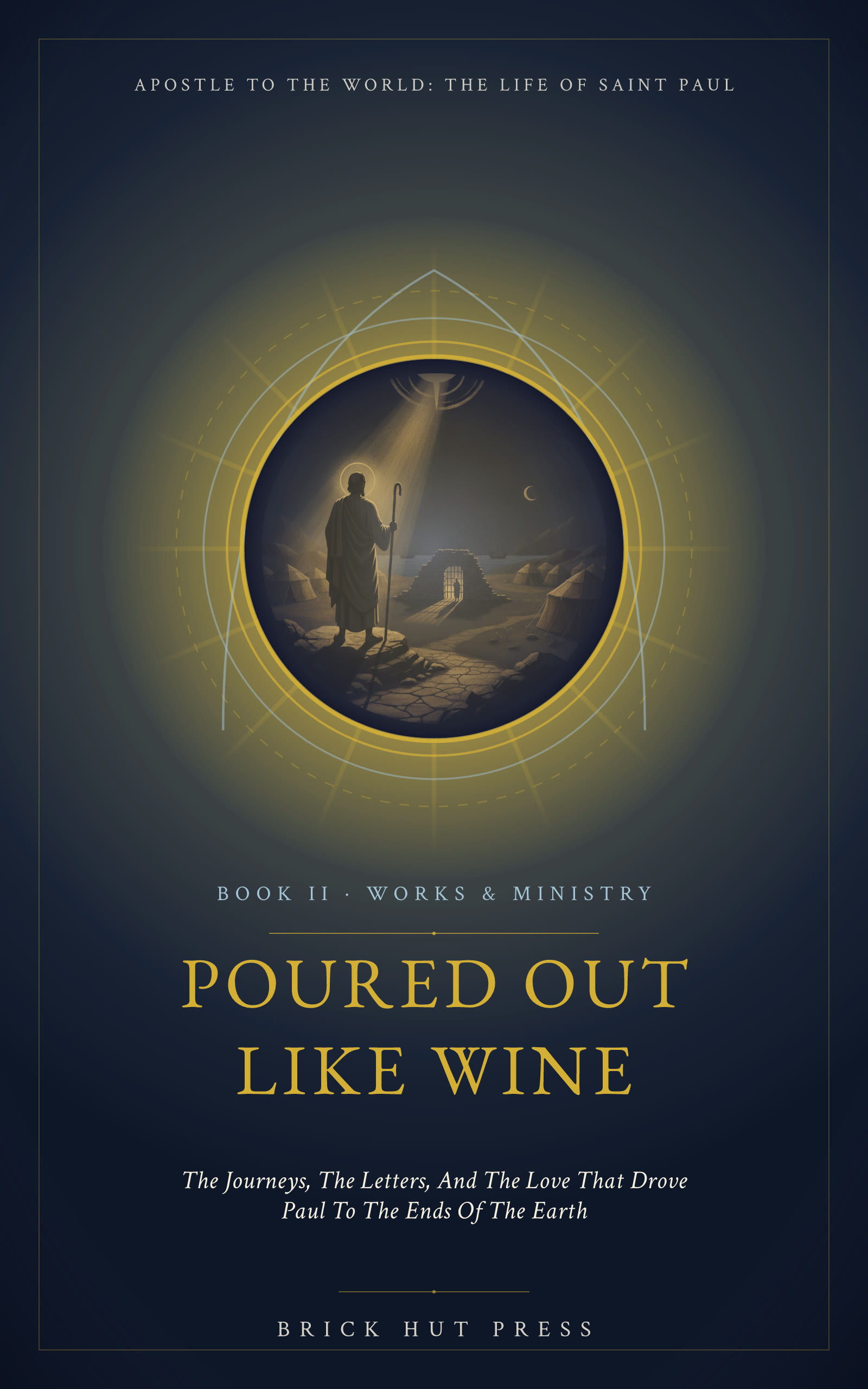
Poured Out Like Wine
Poured Out Like Wine is not a textbook about Paul.
He Crossed Oceans, Survived Shipwrecks, and Wrote Letters That Changed the World, But What Drove Him? Poured Out Like Wine is not a textbook about Paul. It is a living encounter with the man himself, his blistered feet on Roman roads, his voice echoing in synagogues and marketplaces, his hands scratching words by lamplight that believers are still reading two thousand years later. This is the story of an apostle who did not simply preach about love. He was consumed by it.
Read the full description
From his blinding encounter on the Damascus road to the founding of churches across the Roman world, from shipwrecks in the Mediterranean to jail cells where he somehow still managed to write letters full of joy, Poured Out Like Wine walks stride for stride beside Paul through it all. Drawing faithfully from the tradition's own sources, this devotional account strips away the stained-glass distance and returns you to a breathing, suffering, astonishing human being whose life was the message.
Not sure yet? Begin free.
Struck Down, Raised Up, a complete book about this life, free, kept in your own library here, read now; its narration joins free when it is finished.
Receive the free bookAbout this volume
Volume Two of Apostle to the World opens where the first volume left off, with Paul waiting in Tarsus, and it does not let him sit still for long. Barnabas comes looking for him, and from that moment the book moves at the pace of the journeys themselves: Antioch, the Galatian hill towns, the open Aegean, the long stretches of road between synagogue and marketplace and prison cell. This is the volume where the man formed by the Jerusalem years becomes the apostle the world remembers, the one whose letters outlasted the empire that imprisoned him. Readers who want to understand how a persecutor's zeal was repurposed into the engine of the Gentile mission will find that story told here with patience and with care for the texture of each place.
The chapters follow a shape that is both geographical and theological. Antioch's mixed table, with its tanner and its Greek woman and its Roman citizen sharing one cup, stands as the hinge on which everything else turns: a church that did not wait for Paul to arrive at its convictions but had already begun living them before he understood what they would cost. From there the volume carries him through the stoning at Lystra, the hard argument that could have split the infant church over circumcision and the law, and the night in Troas when a dream of a man from Macedonia rearranges the whole direction of the mission. These are not treated as isolated incidents strung on a timeline but as a single argument about what the gospel requires of a Pharisee who has staked his life on being set apart.
The book spends real time in the cities where Paul stayed longest, because that is where the gospel took root and grew hard roots. Eighteen months in Corinth among dockworkers and tentmakers, three years in Ephesus at what the volume calls the hinge of the world, the midnight hymn sung in a Philippian jail cell with feet in stocks: these are rendered as the ordinary, unglamorous labor of building something that would outlast its builder. Athens gets its due as well, not as a triumph but as a different kind of encounter, Paul reasoning in the Areopagus about an altar to an unknown god, discovering that the gospel can speak even to those who have run out of names for the divine. Readers who have wondered how Paul's letters came to exist, not as abstract scripture but as urgent mail to specific congregations with specific quarrels and griefs, will find a chapter devoted exactly to that question, tracing how pastoral necessity became apostolic witness.
The volume does not shy from the cost. The collection carried in love, gathered from poor congregations for poorer saints in Jerusalem, becomes both a practical labor and a theological statement about what one body owes another across the lines that used to divide Jew from Greek, free from slave. And the arrest in the temple, the trials before governors and a king, the storm that drives a grain ship onto the rocks of Malta: all of this is told as the long, unglamorous unspooling of a life that had already been poured out, as Paul himself would later say, like a drink offering. The book does not rush past the shipwreck to get to Rome. It lingers on the island of Malta, on the unexpected mercy shown there, because mercy received is as much a part of Paul's story as mercy proclaimed.
By the time the volume reaches Rome, with Paul chained to a Roman guard and somehow freer than anyone else in the empire, readers will have traveled the roads and sailed the seas he actually crossed, sat at the tables he actually sat at, and felt something of the pressure under which his letters were written. This is a book for anyone who wants Paul not as a doctrine but as a man driven by a love he did not choose and could not refuse, carrying a message to the ends of the earth he knew, one rented room and one storm-tossed ship at a time.
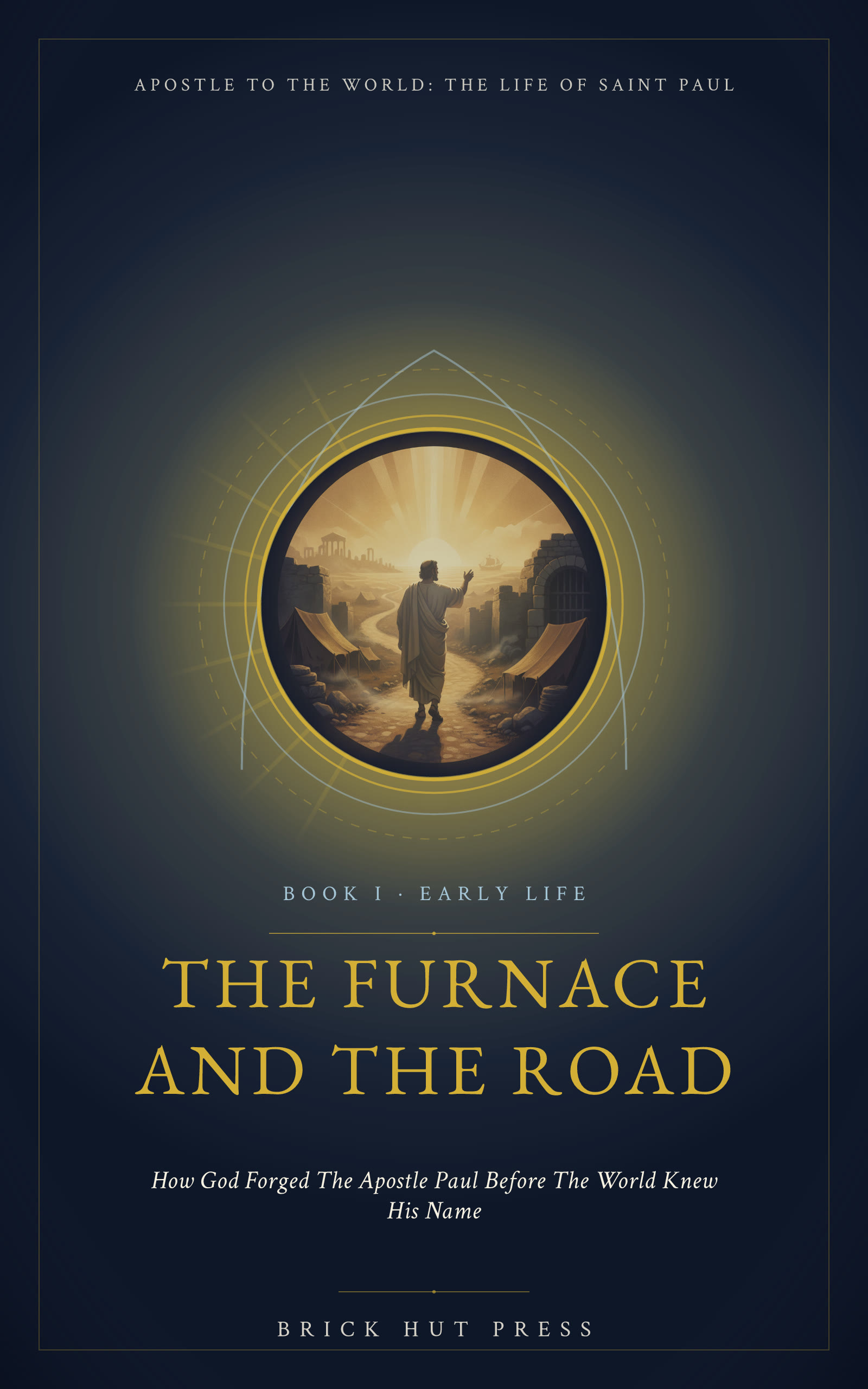
Lives that walk beside Paul the Apostle, chosen for their likeness, not their fame.