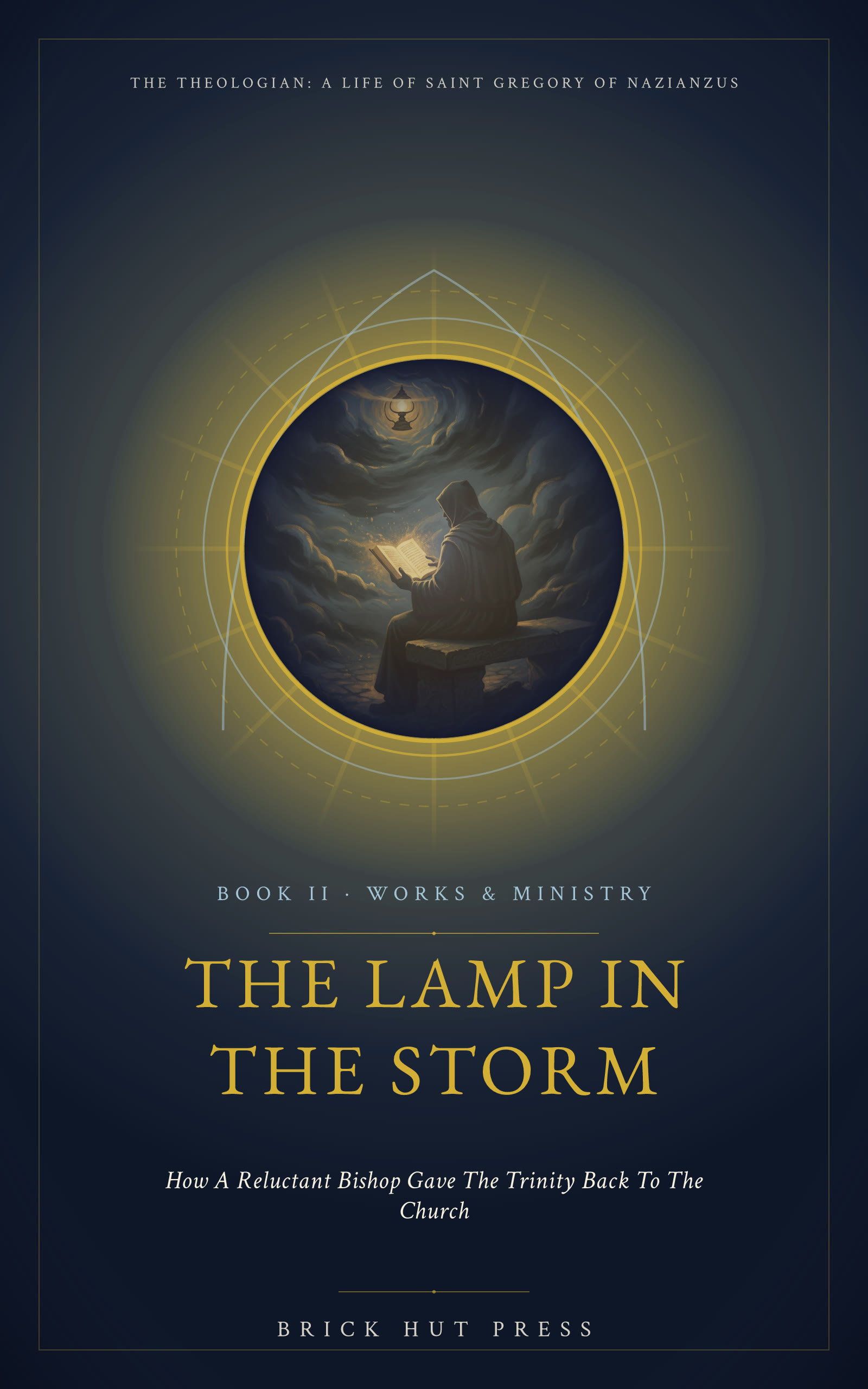
The Lamp in the Storm
Gregory of Nazianzus arrived in Constantinople with almost nothing: a borrowed chapel, a handful of loyal friends, and a faith the empire was trying to extinguish.
He Never Wanted to Be a Saint. The Church Needed Him to Be One Anyway. Gregory of Nazianzus arrived in Constantinople with almost nothing: a borrowed chapel, a handful of loyal friends, and a faith the empire was trying to extinguish. The Arian storm had been building for decades, and the City of Cities had forgotten what it meant to confess the full divinity of the Son and the Spirit.
Read the full description
Gregory, poet, theologian, and lifelong reluctant, stood in that small space called the Anastasia and began to speak. What he said changed Christianity forever. The Lamp in the Storm is not a dry rehearsal of fourth-century council politics. It is the intimate, searching story of a man who craved silence and received a stage, who loved friendship above ambition and watched his closest bonds fracture under pressure, who wrote some of the most luminous verse in the Greek language while presiding over one of the most embattled episcopal posts in Church history. This is Gregory the Theologian as he actually was, wounded, brilliant, holy, and irreplaceable.
Not sure yet? Begin free.
The Theologian's Light, a complete book about this life, free, kept in your own library here, read now; its narration joins free when it is finished.
Receive the free bookAbout this volume
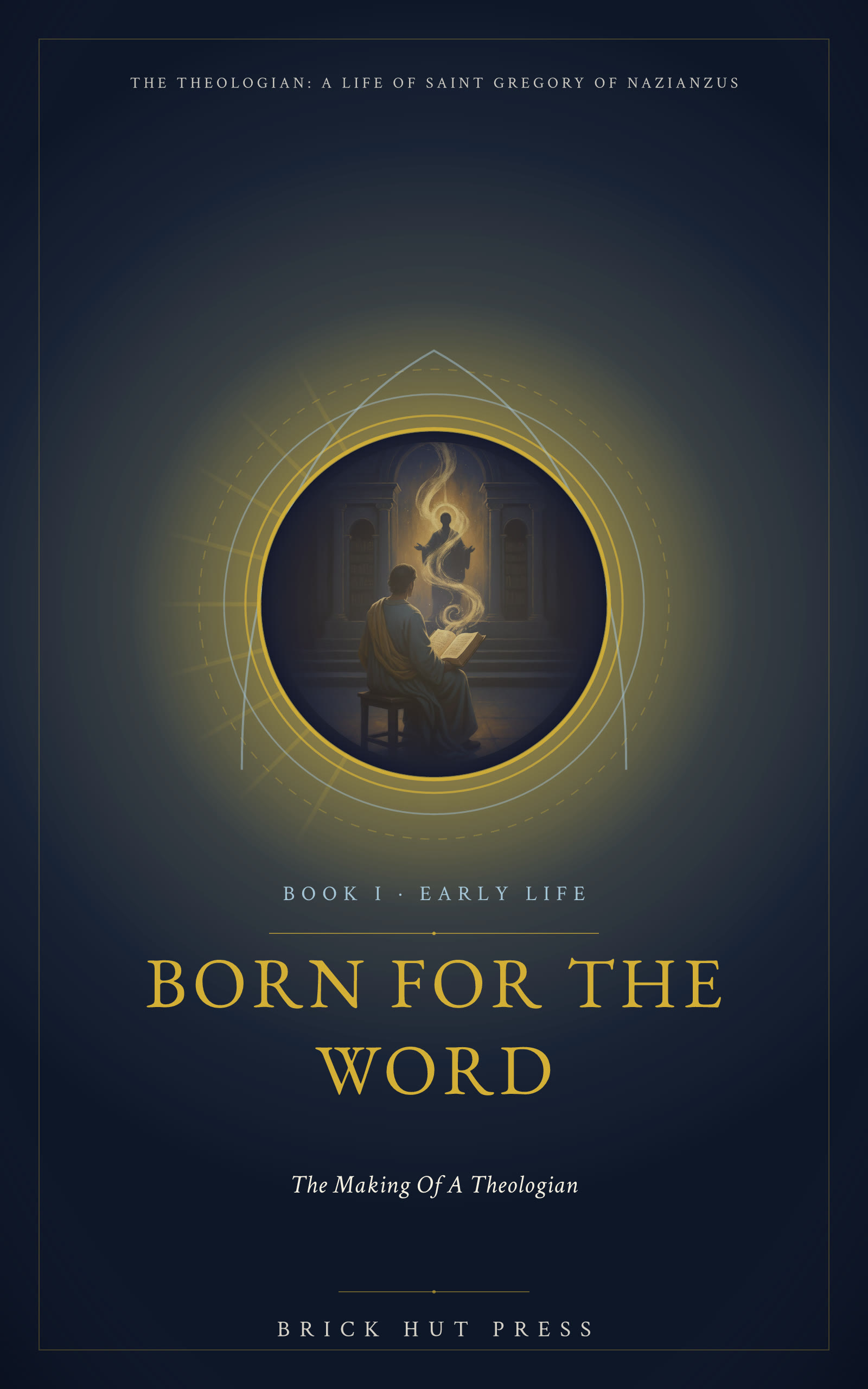
Volume 2 of The Theologian takes up Saint Gregory of Nazianzus at the hour when the quiet scholarship and filial devotion traced in Book 1 are forced, against his every instinct, into public office. It opens at Sasima, a crossroads town with nothing to recommend it but a customs house and a well fit for washing mules, and shows how a consecration meant to shore up Basil's ecclesiastical province instead opened a wound between the two friends that never fully closed. From there the volume follows Saint Gregory the Theologian through the years that made him, however reluctantly, indispensable: his return to serve beside his aging father in the church at Nazianzus, the grief of that father's death, and then the summons to Constantinople itself, a city that had given itself over to Arian preaching and had no patience for the orthodoxy he carried into it.
The heart of this book is the house church of Anastasia, the "Resurrection," a small and unlikely sanctuary where Nicene faith, driven from the capital's great basilicas, found a room to breathe again. It was here, amid stones thrown in the street and worship conducted nearly in secret, that Saint Gregory delivered the sermons history would come to call the Five Theological Orations. Three chapters of this volume, "On the God We Cannot Grasp," "The Son Who Is Not Less," and "The Spirit Who Was Not Yet Named," walk through those orations with the patience they deserve: the insistence that God exceeds every category the mind brings to him, the careful defense of a Son who shares the Father's nature without diminishment, and the harder, newer task of naming the Holy Spirit's full divinity at a moment when even sympathetic bishops hesitated to say it plainly. These chapters do not merely summarize doctrine; they place it back in the hostile, physical city where it was first spoken aloud, where a congregation risked the street outside to hear it.
That risk becomes explicit in "Stones in the Street and Songs in the Dark," which does not soften the violence directed at Anastasia and its people, and the volume is better for refusing to. It lets the reader feel what orthodoxy cost in Constantinople before it shows what orthodoxy won. That win arrives in "The Council He Was Called to Lead," the account of the Second Ecumenical Council of 381, convened at Constantinople, where the very teaching defended in a borrowed house church became the settled faith of the empire's bishops. But Brick Hut's telling does not let the council stand as simple triumph. The chapter that follows, "The Farewell That Became His Finest Sermon," and the one after it, "The Wound of Basil's Absence," hold together the two truths this volume insists on keeping side by side: that Saint Gregory presided briefly over the council that vindicated his life's teaching, and that he left it, and left the capital, wounded by factional maneuvering and grieving a friend he would never again sit beside.
What makes this volume more than a chronicle of ecclesiastical politics is its refusal to separate the doctrine from the man who suffered to speak it. The Gregory who emerges here is not a serene theologian dispensing settled formulas from a safe chair. He is a man who did not want Sasima, did not want Constantinople, and did not particularly want the vindication that arrived too late and too entangled with betrayal to taste like victory. "Home, at Last, and Almost Free" closes the volume not with triumph but with something quieter and more honest: a return to Cappadocia that reads less like retirement and more like a long exhale. Readers who come to this book wanting to understand how the doctrine of the Trinity as the Church now confesses it was forged, not in abstraction but in a besieged house church, under stones and insults, by a bishop who never stopped wishing someone else had been asked, will find that story told here with the patience and gravity it has always deserved.
Lives that walk beside Saint Gregory the Theologian, chosen for their likeness, not their fame.