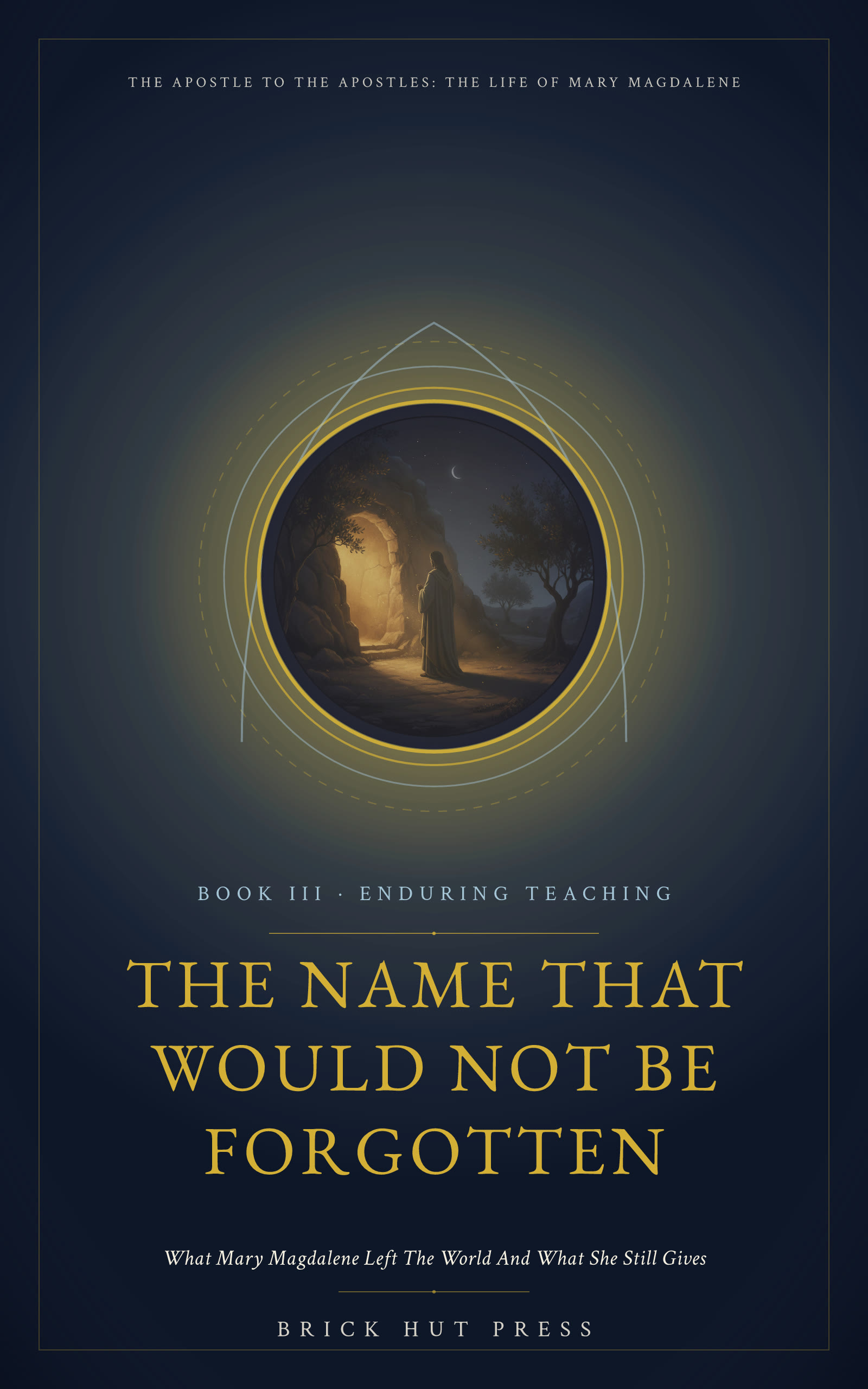
The Name That Would Not Be Forgotten
The Church gave her the title no other woman in history has held, Apostle to the Apostles, and still she kneels at the edge of something no title can contain.
She Was the First to See the Risen Christ, and the World Has Never Stopped Saying Her Name Two thousand years of prayer, art, legend, and longing have gathered around one woman. Mary Magdalene: delivered from darkness, faithful when others fled, standing at the tomb while the world slept, the first human voice to carry the news that changed everything.
Read the full description
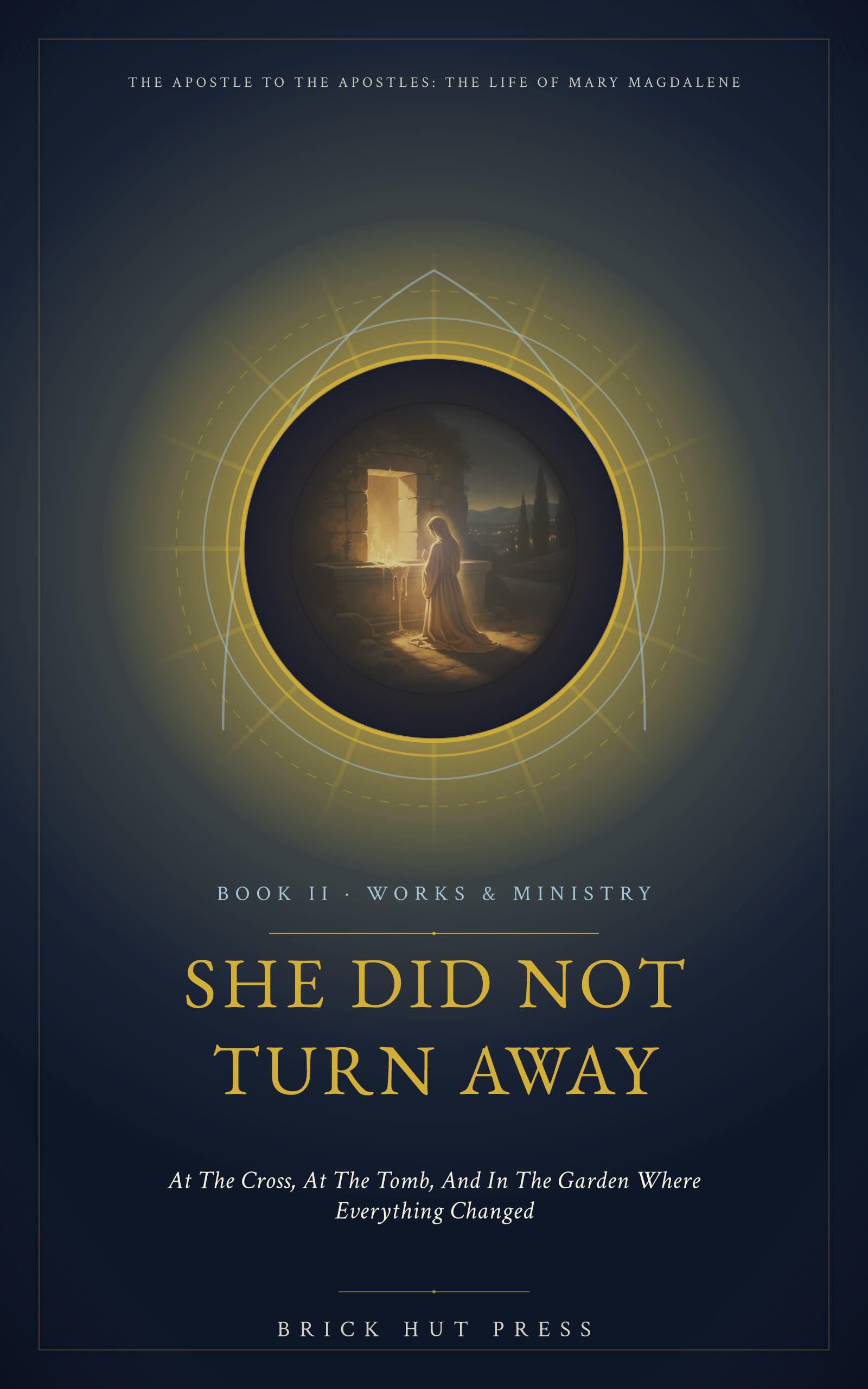
The Church gave her the title no other woman in history has held, Apostle to the Apostles, and still she kneels at the edge of something no title can contain. The Name That Would Not Be Forgotten is a warm, candlelit journey through the full life of Mary Magdalene as the living tradition has loved and kept her. This is not a book that dismantles her. It is a book that sits with her, in the Gospels, in the golden legends, in the cells of mystics, in the silence of the wilderness where she is said to have spent her final years hidden in God. Every face she bears is honored here: the delivered woman, the steadfast disciple, the witness of the empty tomb, the contemplative, the one who would not let go.
Not sure yet? Begin free.
The Woman Who Stayed Until the Dawn, a complete book about this life, free, kept in your own library here, read now; its narration joins free when it is finished.
Receive the free bookAbout this volume
This third volume takes up a different kind of history than the two that came before it: not the years Saint Mary Magdalene walked the roads of Galilee, but the centuries during which the Church, the painters, the poets, and the ordinary faithful kept deciding, again and again, who she was to them. It opens in Rome in 591, in the voice of a pope who had never meant to be pope, and traces how a single homily fused three women of the Gospels into one figure: the sinner forgiven at Simon's table, the sister who sat at the Lord's feet, and the apostle who stood first at the empty tomb. That fusion gave the Latin West a saint of extraordinary reach, a woman whose face could hold both desperate penitence and unshakable devotion, and this volume does not apologize for her or explain her away. It asks instead what the Church did with the woman Gregory made, and what the woman who was already there, named plainly by John and Luke as first witness and beloved disciple, kept giving back no matter how the centuries tried to simplify her.
From Gregory's Rome the book moves into the medieval world that could not get enough of her. The Golden Legend chapters follow her into the popular imagination of pilgrims and preachers, the boats that supposedly carried her to Provence, the cave at La Sainte-Baume where she was said to have spent her last years in prayer, the relics that drew crowds to Vézelay. Readers will meet the penitent who became a mirror, the face every repentant sinner could look into and see hope rather than shame, and they will meet the contemplative who would not move from the Lord's feet, the woman Martha's sister became in the hands of monks and mystics who needed a model for the prayer that simply stays. A full chapter is given to the painters, Giotto to Titian to Georges de La Tour, because no saint's inner life has been argued over more visibly in oil and tempera than hers, and the book reads those canvases as theology as much as art.
The volume does not let the Latin story stand as the whole story. A chapter turns east, to the Orthodox churches that never merged her with the sinner of Luke seven at all, that kept her simply as Myrrh-bearer and Equal-to-the-Apostles, her name whole and her title intact across a thousand years while Rome was still working out its composite portrait. This corrective matters to the book's larger argument, that the fullest Mary Magdalene has always required more than one tradition's memory to hold her.
The twentieth century receives its own reckoning here too, the chapter on the century that tried to unmake her tracing how modern scholarship, popular novels, and shifting sensibilities each took their turn dismantling Gregory's composite figure, sometimes for good reason, sometimes replacing one invention with another. The book follows that unraveling honestly, without defensiveness, right up to the morning in 2016 when Pope Francis raised her commemoration to a feast and gave her, officially and permanently, the title Apostle to the Apostles. That decision becomes the volume's turning point: not a reversal of history but a homecoming, the Church naming at last what the faithful had quietly believed all along.
The closing chapters bring the reader into something closer to companionship than argument. One insists she is at once mystic, penitent, and apostle, refusing to choose a single Mary Magdalene when the tradition itself never did. Another offers the Akathist, a litany, and simple silence as ways of praying with her rather than merely about her. The last chapter is addressed plainly to anyone who has known what it is to be lost and then found, which is, this book suggests, the real reason her name was never forgotten.
Lives that walk beside Mary Magdalene, chosen for their likeness, not their fame.