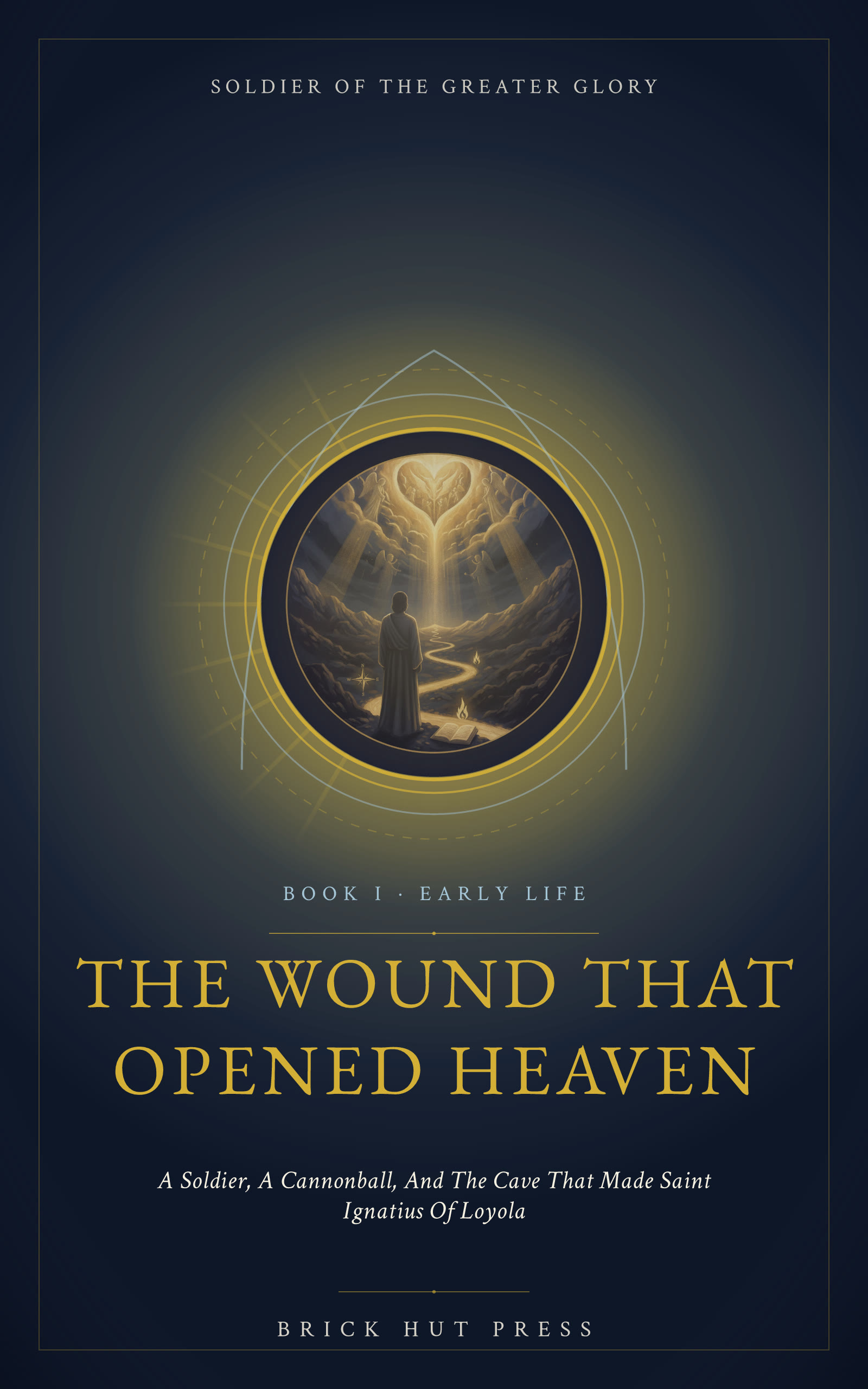
The Wound That Opened Heaven
In 1521, a French cannonball tore through Íñigo of Loyola's leg at the walls of Pamplona, and God used the wreckage to forge one of history's most transformative souls.
A Cannonball Changed Everything. The Cave Changed the World. In 1521, a French cannonball tore through Íñigo of Loyola's leg at the walls of Pamplona, and God used the wreckage to forge one of history's most transformative souls.
Read the full description
What began in agony on a battlefield became, through months of fever, forced stillness, and divine restlessness, the interior journey that would eventually give the Church the Society of Jesus and every soul willing to pray it the incomparable gift of the Spiritual Exercises. The Wound That Opened Heaven is not a distant biography of a marble saint. It is a close, devotional companion to the raw, human, blood-and-bone story of how Íñigo became Ignatius, tracing him from the smoke of Pamplona to a sickbed in Loyola, from a moonlit road to Montserrat to the cave at Manresa where darkness and light fought openly for a man's soul. If you have ever made the Spiritual Exercises, longed to make them, or simply wondered how one wound could become such a fountain of grace, this book was written for you.
Not sure yet? Begin free.
The Pilgrim's Wound, a complete book about this life, free, kept in your own library here, read now; its narration joins free when it is finished.
Receive the free bookAbout this volume
Before he was Saint Ignatius of Loyola, he was Íñigo, a vain and gifted young nobleman riding toward a war he expected to win glory in, not grace. This first volume of Soldier of the Greater Glory begins there, in the wine-colored doublet and the careful hair, because to understand what God does to this man at Pamplona, a reader has to first believe in the man who had everything to lose. The book does not rush past his vanity to get to his sanctity. It sits with him in it, in the courts and castles of Castile, in the household that shaped his manners and his hungers alike, long enough that when the cannonball finds him, the reader feels the full weight of what is being broken.
The chapters that follow trace a boyhood given away to other households in the Basque custom, a wound that shatters a leg and a life's ambition in the same instant, and the long, humiliating convalescence at Loyola Castle that becomes, against all expectation, the hinge of everything. "Boredom as a Sacrament" and "Two Daydreams, One Discovery" sit at the center of this volume's argument: that holiness did not descend on Íñigo like lightning but crept in sideways, through the only reading material available to a bedridden knight, through the strange and telling difference between how a daydream of chivalric conquest felt in the body and how a daydream of following Christ felt afterward. This is the seed of discernment itself, the great Ignatian gift to the whole Church, caught here in its rawest, most unpolished form: a bored, restless young man noticing that one kind of joy lingers and another kind evaporates.
From the sickbed the volume follows him outward, to the night he keeps vigil before Our Lady at Montserrat and lays down his sword as another man might lay down a crutch, and then to Manresa, where "What the Cave Gave Back" takes up the hardest and most honest stretch of his early conversion: not instant peace but scruples, darkness, extremities of penance, and a slow, costly emptying that leaves him raw enough to finally hear God. Readers who come to Ignatius already knowing him as the founder of an order, the author of the Spiritual Exercises, the architect of a whole way of discernment, will find here the unglamorous furnace where all of that was forged, well before there was any Society, any Rome, any papal seal.
The volume closes with his first attempts to live what Manresa had taught him: the awkward, often painful beginnings of "The Schoolmaster of Souls," a man barely literate in theology trying to teach others to pray, and the journey to Jerusalem that he undertook with a pilgrim's whole heart only to be sent home by the Franciscan custodians who judged the Holy Land too dangerous for his intended mission. "The Man Who Came Home Empty-Handed" is not a defeat dressed up as triumph. It is presented honestly, as the volume has presented every setback before it, a door closed so that another, stranger door might eventually open: the one that leads, in later volumes, to Paris, to Rome, and to the founding of the Jesuits.
What makes this account trustworthy is its refusal to smooth the man into a plaster saint before his time. The vain horseman, the self-admiring legs, the daydreams that took years to sort themselves into obedience, all of it stays on the page. This is a book for readers who want to watch sanctity arrive the way it actually arrives for most of us: slowly, through ordinary rooms, through long convalescence and longer patience, until a soldier's wound becomes, almost without his noticing, the opening through which heaven gets in.
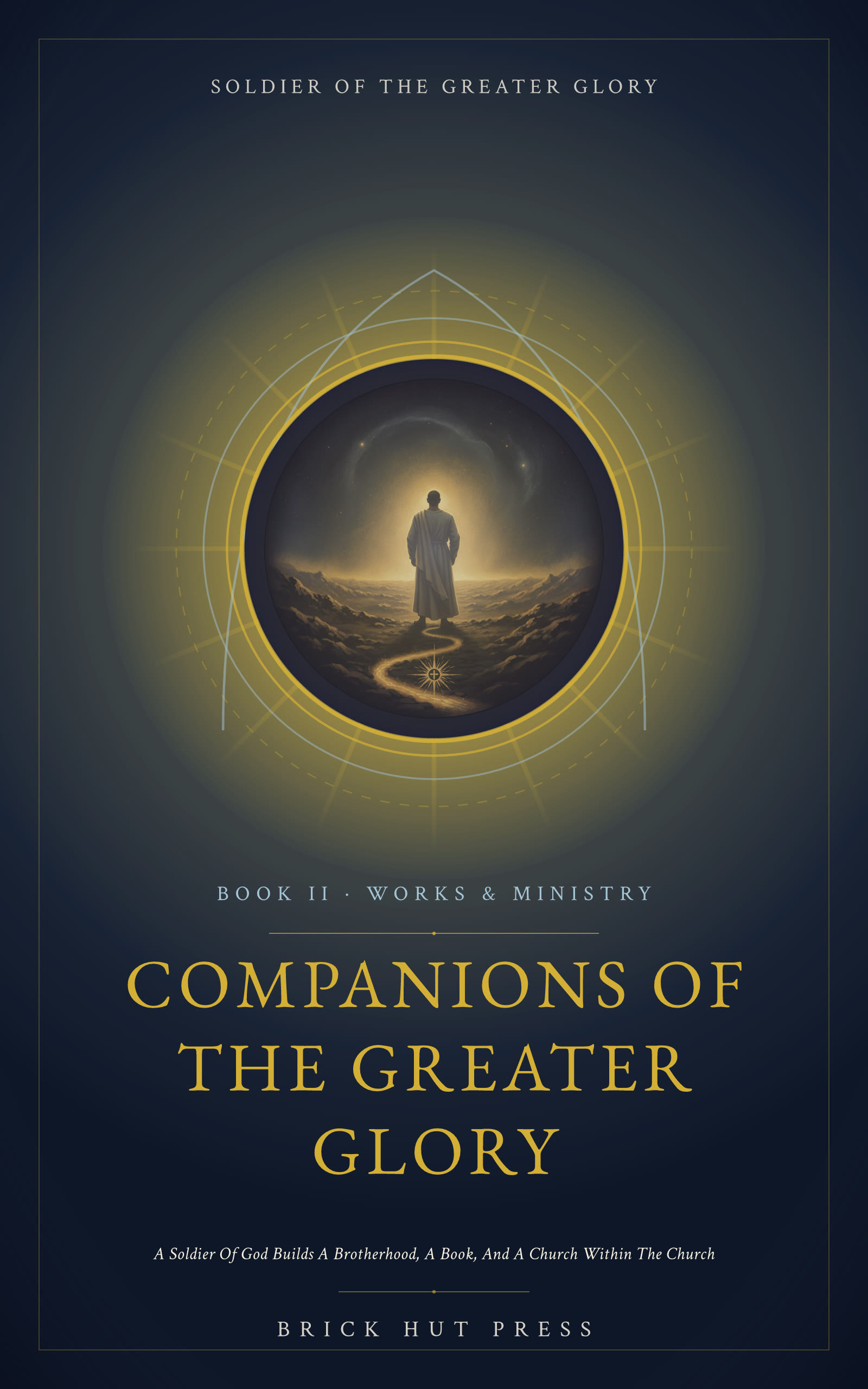
Lives that walk beside Saint Ignatius of Loyola, chosen for their likeness, not their fame.