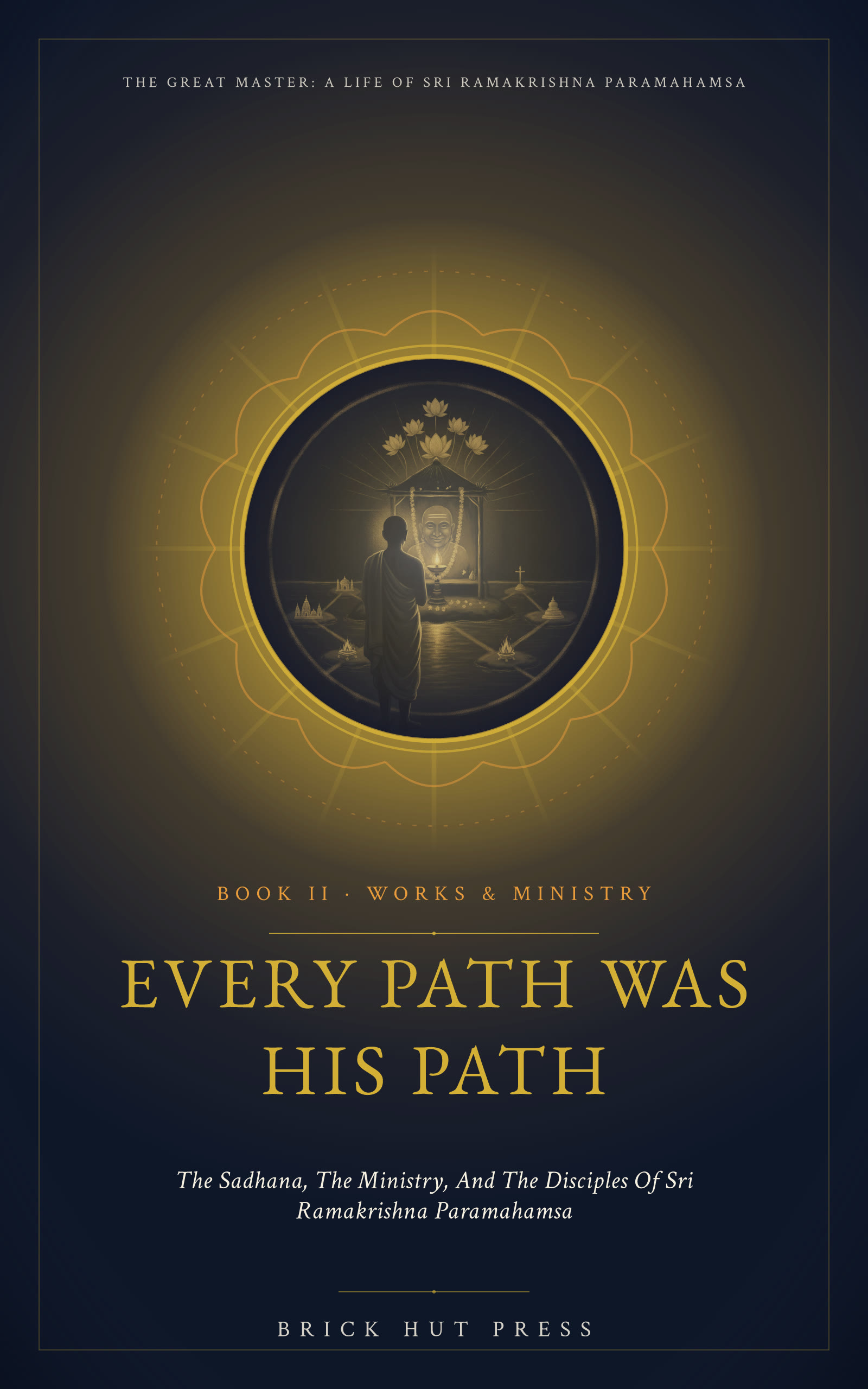
Every Path Was His Path
What followed was not a quiet life of prayer.
He Entered Every Path, and Proved They All Lead Home At Dakshineswar, a priest stepped into the temple, touched the flame of the Divine, and was never the same again. What followed was not a quiet life of prayer. It was a blazing, all-consuming journey through the depths of every spiritual tradition humanity has ever known, a sadhana without parallel in recorded religious history.
Read the full description
Every Path Was His Path is the portrait that devoted readers of Sri Ramakrishna have been waiting for: intimate, reverent, and alive with the fire of the original sources. Drawn faithfully from the sacred accounts of the Ramakrishna-Vivekananda tradition, this book traces the full arc of the Master's life, his rapturous practices, his world-transforming realizations, and the extraordinary circle of disciples he gathered, shaped, and sent forth to change how humanity understands God. If the Gospel of Sri Ramakrishna gave you a window into the Master's presence, Every Path Was His Path opens the door.
Not sure yet? Begin free.
The Weeping God-Child, a complete book about this life, free, kept in your own library here, read now; its narration joins free when it is finished.
Receive the free bookAbout this volume
This second volume opens where the first left off, at the moment the fire of longing in the young priest of Dakshineswar finally drew a teacher capable of recognizing it for what it was. The Bhairavi Brahmani's arrival by boat in 1861 begins a decade of sadhana that this book follows with patience and care: not as a sequence of strange episodes to be marveled at from a safe distance, but as a deliberate, exhaustive testing of every major path to God that the Indian tradition has produced. Readers who come to this volume wanting to understand what it means to say Sri Ramakrishna Paramahamsa "practiced every religion" will find here the actual record of how that claim earned its weight, through years of discipline rather than a single afflatus of insight.
The chapters on Tantra and the Vaishnava turn take the sixty-four petals of the Tantric disciplines and the madness of Radha's love for Krishna seriously as disciplines, with their own logic, their own dangers, and their own fruits. The volume does not flinch from the strangeness of Sri Ramakrishna's methods under the Bhairavi's guidance, nor does it rush past the tenderness of the Vaishnava period, when he is remembered to have lived for a time as a woman among women, absorbed in Radha's longing until the boundary between devotee and Divine Beloved grew thin. These chapters prepare the ground for the volume's hinge, the arrival of Totapuri, the naked wandering monk who taught the formless path of Vedanta and who, in the chapter called "The Day the Last Veil Fell," brought Sri Ramakrishna into nirvikalpa samadhi, the undivided realization that Advaita calls the highest fruit of all seeking. From there the book turns outward: a chapter on the months Sri Ramakrishna is remembered to have practiced Islam under a Sufi teacher's guidance, his face turned toward Mecca, is placed deliberately beside the story of Saradamani, the wife who came to Dakshineswar and was received not as a wife in the ordinary sense but as the Divine Mother herself, worshipped in the Shodashi Puja. Together these chapters make the volume's central argument in narrative form: that for this teacher, every path tried with sincerity led to the same door.
The second half of the book turns to Dakshineswar as a living ministry. Keshab Chandra Sen and the Brahmo reformers come to the garden and encounter a holy man who neither flatters nor dismisses their reforming zeal. The devotees begin to gather, and the volume gives particular attention to the day young Narendranath Datta, who the world would come to know as Swami Vivekananda, sang before him and the Master wept, a scene the tradition has never stopped turning over. Chapters on the parables, the public ecstasies and the witnesses who recorded them, and the slow formation of what would become an inner circle of monastic and householder disciples, show a teacher who taught not through treatise but through story, laughter, and the unconcealed evidence of his own states.
The volume closes where every honest life of Sri Ramakrishna Paramahamsa must close, with the wound in his throat at Cossipore that no physician could heal, and with the sixteenth of August, 1886. These final chapters are written with the same unhurried attention as the chapters on ecstasy and realization that precede them, because the tradition has always insisted that the Mahasamadhi belongs to the same continuous life as the samadhis that came before it. Readers finishing this book will have in hand not a catalogue of wonders but a coherent account of how a Bengali priest's hunger for the Mother became, through disciplined years and devoted witnesses, a teaching that still tells seekers of every tradition that the path they are already walking may be the one that leads home.
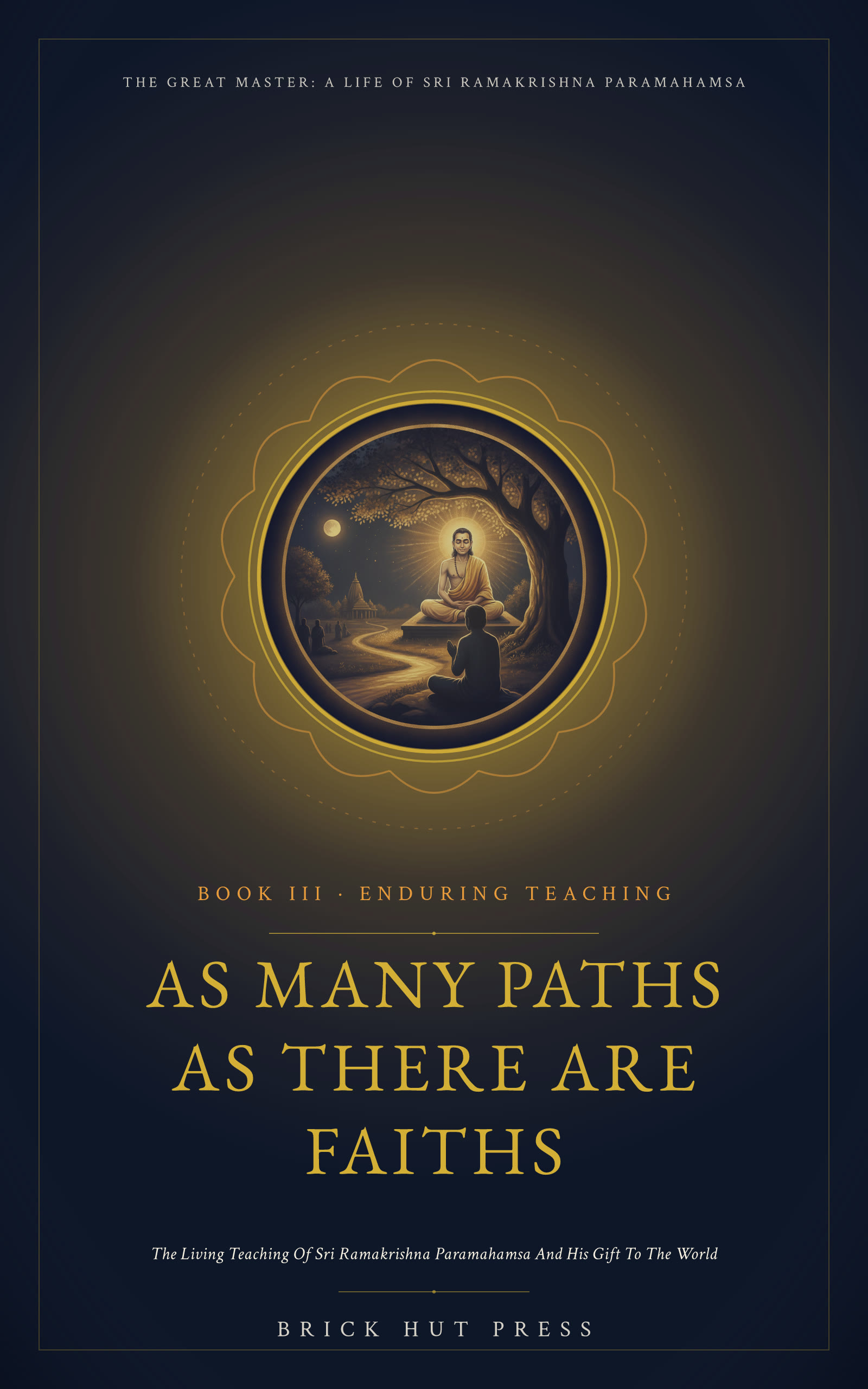
Lives that walk beside Sri Ramakrishna Paramahamsa, chosen for their likeness, not their fame.