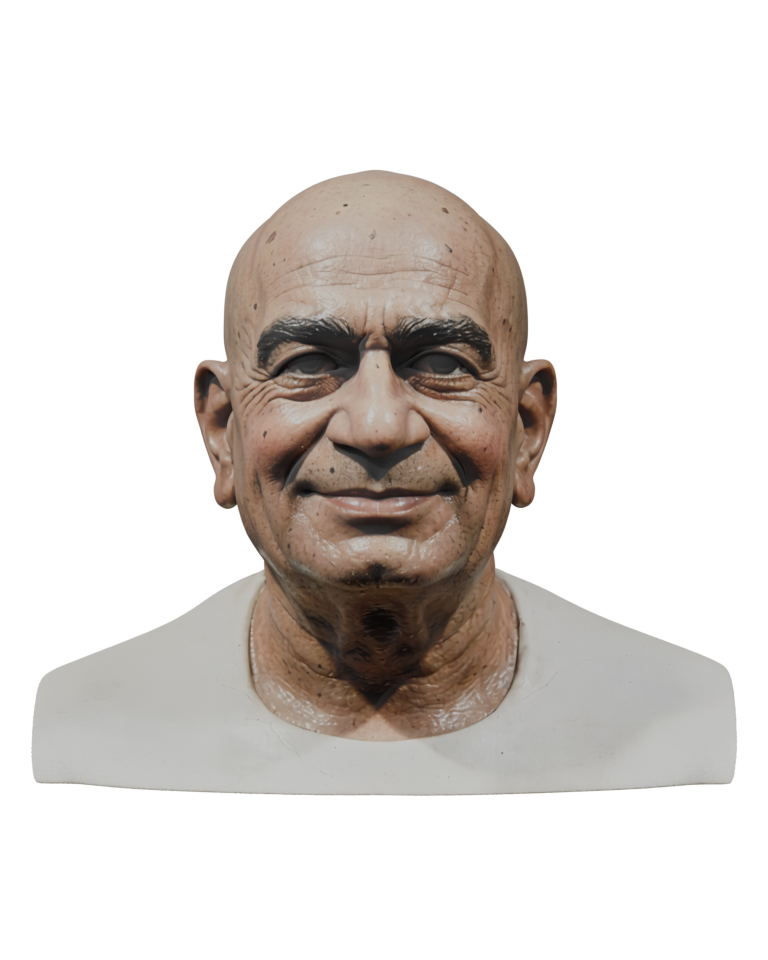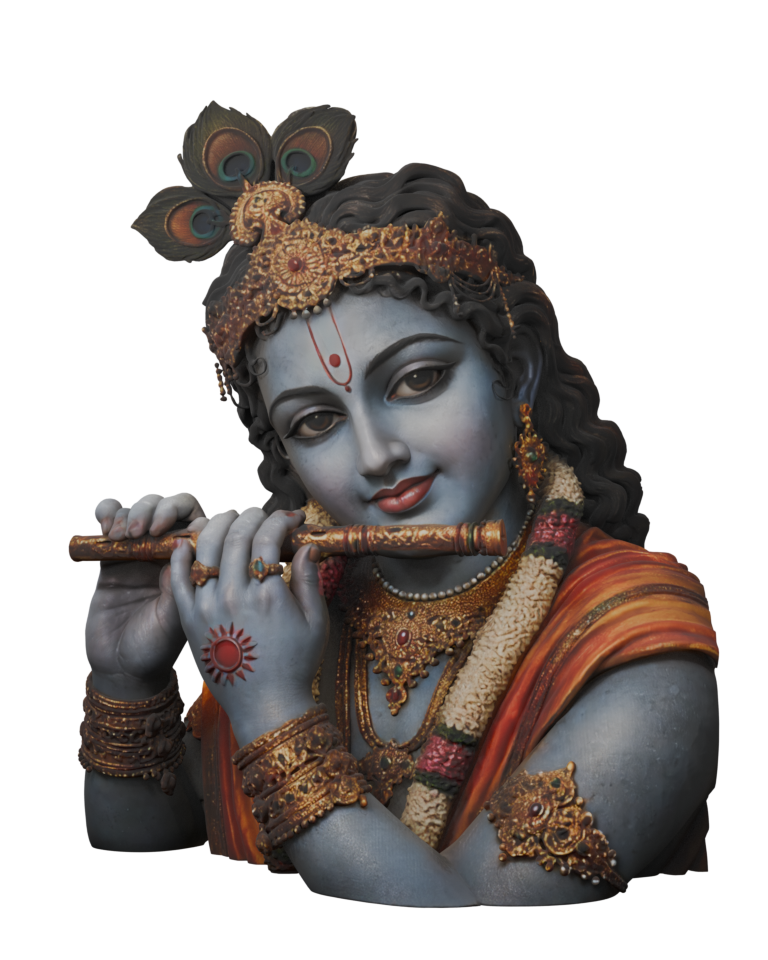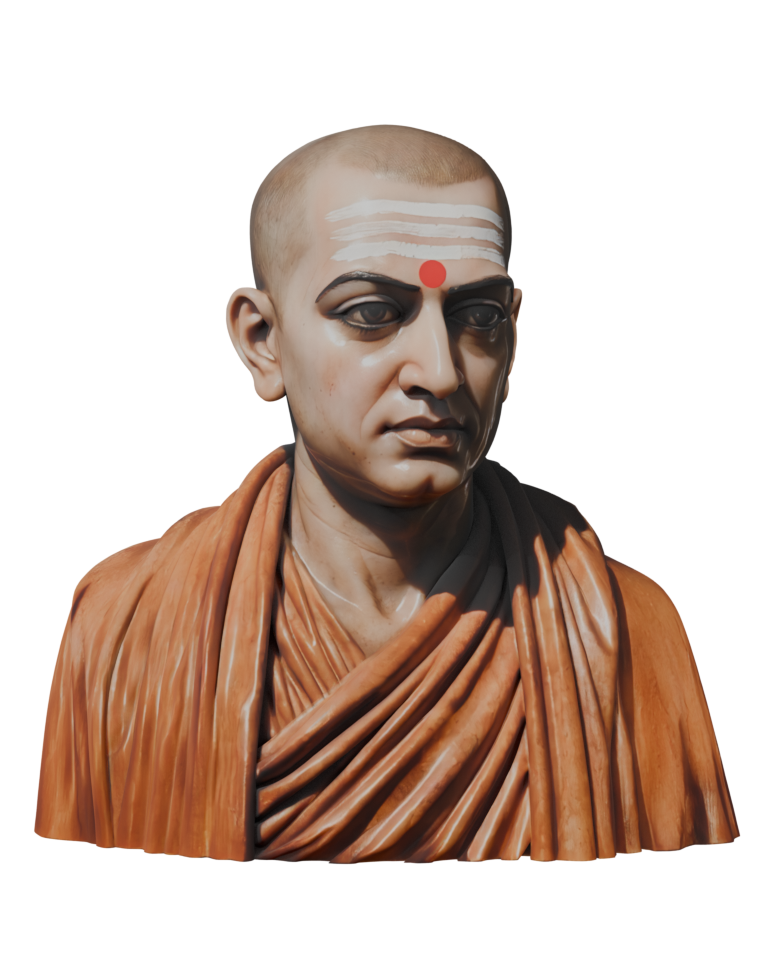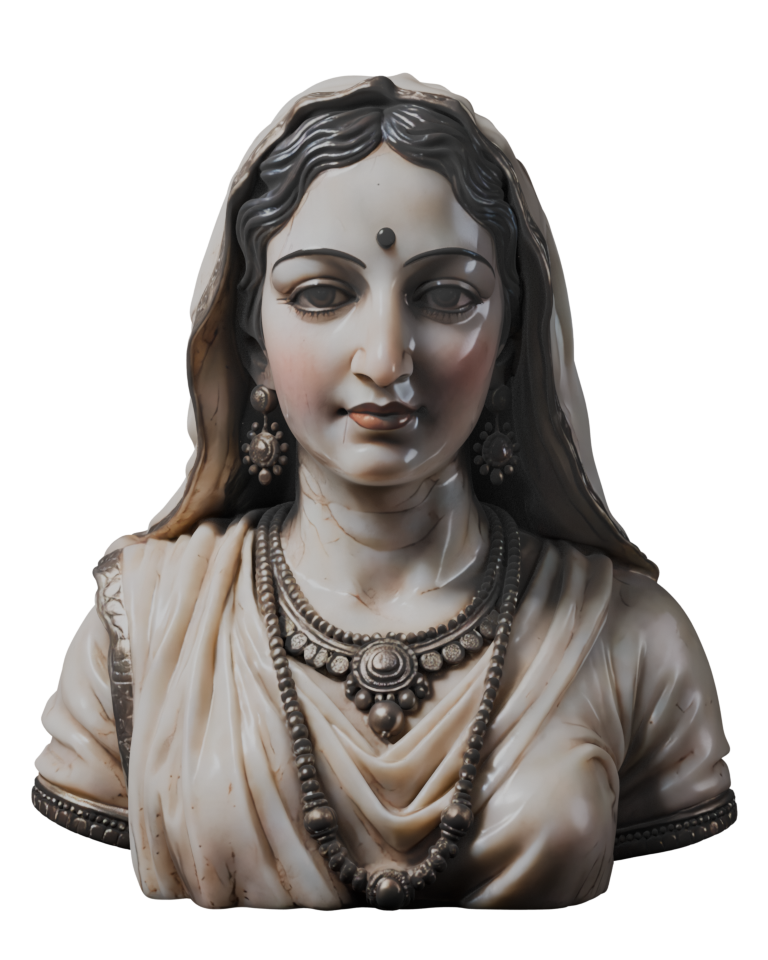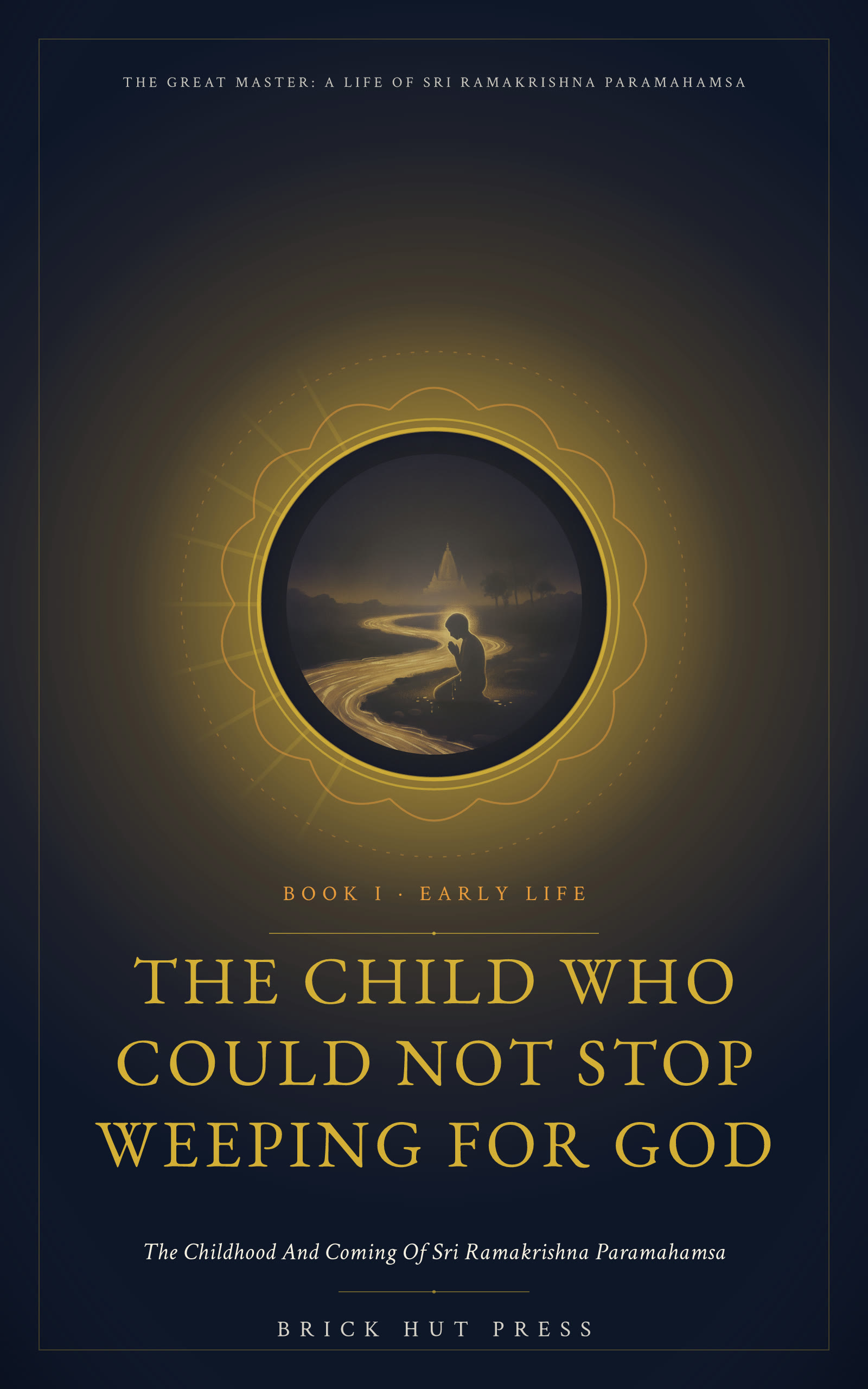
The Child Who Could Not Stop Weeping for God
Before the world came to sit at his feet, there was a boy named Gadadhar, walking barefoot through the fields of Kamarpukur, weeping for something he could not name.
He Wept for God Before He Had Words for What God Was. Before the ecstasies. Before the temple. Before the world came to sit at his feet, there was a boy named Gadadhar, walking barefoot through the fields of Kamarpukur, weeping for something he could not name. He fainted at the sight of beauty. He forgot to eat. He disappeared into states of rapture that frightened his family and confounded his neighbors. No one had a word for what burned so constantly in his chest.
Read the full description
He did not need one. This is the story the Gospel of Sri Ramakrishna does not tell, the childhood, the village, the early fires of a soul that would one day illuminate an entire tradition. The Child Who Could Not Stop Weeping for God is a portrait not of a saint in marble, but of a boy utterly, helplessly alive to the divine. Drawn with tenderness and fidelity to the living tradition that has kept his memory luminous for generations, this book brings Sri Ramakrishna Paramahamsa back to the beginning, to Gadadhar, the child, and asks us to witness him there.
Not sure yet? Begin free.
The Weeping God-Child, a complete book about this life, free, kept in your own library here, read now; its narration joins free when it is finished.
Receive the free bookAbout this volume
Before Sri Ramakrishna Paramahamsa was the Paramahamsa of Dakshineswar, the breaker of caste and sect who gathered every path of worship into his own open hand, he was a child in a small Bengal village who fainted at the sight of white cranes against a thundercloud and could not explain, even to himself, what had happened to him. This volume begins there, at Kamarpukur, and it asks the reader to take the child as seriously as the tradition has always taken him: not as a prelude to greatness but as greatness already present, unrecognized, in a boy who wept.
The book opens, rightly, before his birth, with the dream his father Khudiram Chattopadhyay dreamed at Gaya, at the feet of the Vishnupada temple where the river itself hides its truest life beneath the sand. From there it moves into the particular textures of a particular place: the lanes and ponds of Kamarpukur, the household of Khudiram and his wife Chandramani, and the slow unfolding of a childhood that looked, from the outside, like any other poor Brahmin boy's, and was, from within, something else entirely. Chapters on the cranes, on the sacred thread he would not accept without reckoning honestly with what it meant, and on his mother Chandramani (to whom this volume gives full and deserved weight, since the tradition has always held that everything he first knew of God he learned at her side) trace the formation of a sensibility too tender for the ordinary demands of schooling, caste, and ambition, and too awake to the world behind the world to be mistaken for simple eccentricity.
The second half of the volume follows the hinge on which the whole life turns: his father's death, and the road that carried the family's fortunes, and eventually the boy himself, toward Calcutta. Here the book takes up Rani Rashmoni, the pious and formidable patroness whose vision built the Dakshineswar temple, and treats the building of that temple itself as a chapter worth telling in full, a temple the volume frames as something heaven itself had a hand in raising, stone by stone, river-ghat by river-ghat, before it knew what it was being prepared to hold. The arrival of a boy who had not yet become a priest, who would touch the feet of the goddess for the first time without fully knowing what he was setting in motion, closes this volume at the threshold rather than past it.
What this book does not do is rush him into sainthood. The chapter called "The Great Hunger" and the one that follows, where the Ganga meets the temple garden, bring the volume to its close not with resolution but with appetite: a young man standing at the edge of Dakshineswar with a hunger for God that has not yet found its discipline, its guru, or its form. Readers who come to this series expecting the ecstasies and ordeals of the sadhana, the ochre-clad Bhairavi, the long nights before the Kali temple, will find all of that waiting in the volumes still to come. This first book is deliberately smaller and, for that reason, foundational: it is the record of how a particular soil, a particular mother, a particular village of tanks and paddy fields and wandering monks, received and shaped a child the tradition has never hesitated to call divine from his first breath.
The voice of the book stays close to the devotional sources that Vedanta and Bengal Vaishnavism have long trusted, and it asks to be read in that spirit rather than as a biography seeking outside verification. It does not apologize for Khudiram's dream or explain away the cranes. It asks the reader, as the opening chapter asks it, to receive the first fact of this history exactly as the tradition has always received it, and then to walk the rest of the road from Kamarpukur to the Ganga's edge with patience, since the volumes ahead depend on having first understood what kind of child it was who arrived there, still unformed, still hungry, already chosen.

Lives that walk beside Sri Ramakrishna Paramahamsa, chosen for their likeness, not their fame.